
Sleep deprivation is not a minor inconvenience. It is a systemic physiological stressor with measurable effects on every organ system in the body. The consequences are dose-dependent: a single night of restricted sleep produces acute but largely reversible impairment, while chronic restriction accumulates serious health consequences that rival major lifestyle risk factors in magnitude.
The Alcohol Equivalent
Research comparing sleep deprivation to blood alcohol concentration provides the clearest way to understand impairment. Seventeen hours of continuous wakefulness -- waking at 7 AM and staying up until midnight -- produces cognitive impairment equivalent to a 0.05% BAC. After 24 hours without sleep, impairment reaches 0.10% BAC, which is legally drunk in all US states.
Unlike alcohol, sleep-deprived people consistently underestimate their own impairment. Research by Dinges and Van Dongen showed people restricted to 6 hours for 14 days felt only mildly impaired while performing equivalently to someone awake for 24 hours. This disconnect between subjective and objective impairment is one of the most dangerous aspects of sleep deprivation.
Acute Effects -- One to Three Nights
Cognitive function
Sustained attention degrades significantly after a single night below your sleep need. Reaction time slows progressively. Working memory -- the ability to hold and manipulate information simultaneously -- is impaired, affecting decision-making and driving safety. Creative thinking and novel problem-solving are particularly sensitive: sleep-deprived people produce more stereotyped, less innovative responses.
Emotional regulation
A single night of poor sleep increases amygdala reactivity by approximately 60%, per research by Matthew Walker. The prefrontal cortex, which normally regulates emotional responses, loses functional connectivity with the amygdala during sleep deprivation -- producing increased irritability, emotional reactivity, and reduced frustration tolerance.
Immune function
A single night of 4-hour sleep reduces natural killer (NK) cell activity by approximately 70%. NK cells are the immune system's frontline defense against viral infections. Research by Prather et al. showed people sleeping under 6 hours were 4x more likely to develop a cold when exposed to the rhinovirus compared to those sleeping 7+ hours.
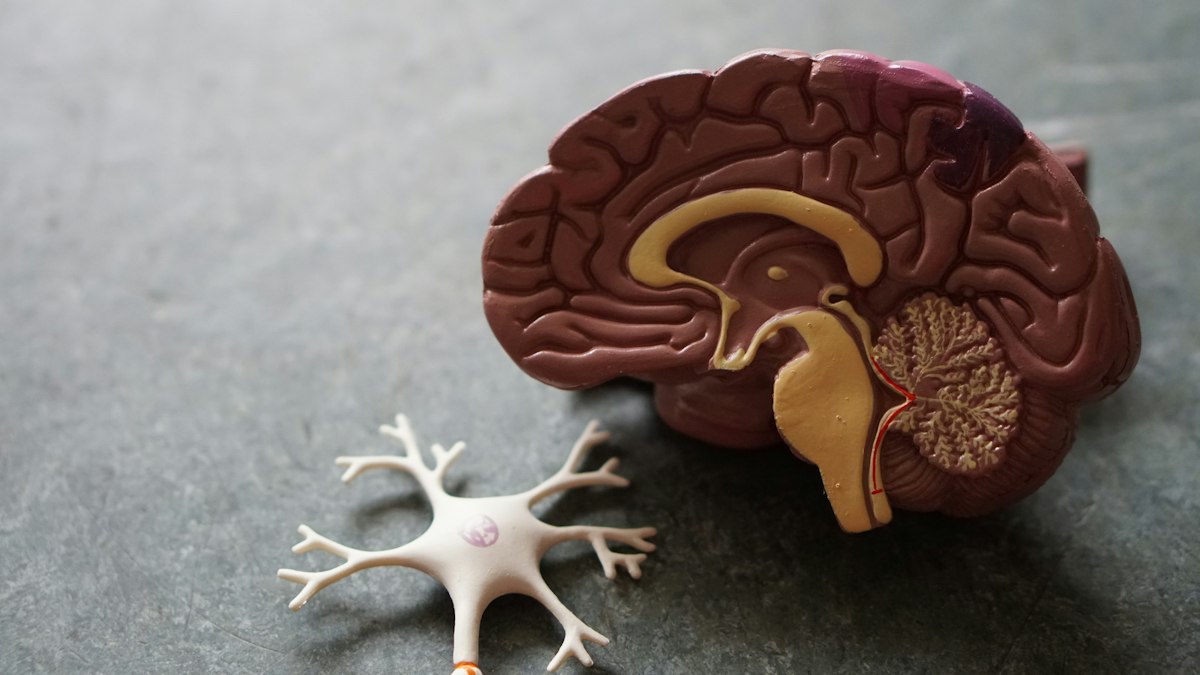
The prefrontal cortex is the brain region most sensitive to sleep deprivation -- responsible for decision-making and emotional regulation. Photo: Unsplash
Chronic Effects -- Weeks to Months
Cardiovascular system
Adults consistently sleeping under 6 hours show a 45% higher risk of cardiovascular disease compared to those sleeping 7-8 hours (European Heart Journal meta-analysis). Sleep deprivation elevates blood pressure, increases inflammatory markers (CRP, IL-6), and dysregulates the autonomic nervous system in ways that increase arrhythmia risk.
Metabolic system
Two nights of 4-hour sleep produce insulin resistance comparable to early-stage type 2 diabetes in healthy adults. Ghrelin increases 24%, leptin decreases 18%, producing increased appetite for high-calorie foods. Growth hormone -- released predominantly during slow-wave sleep -- is suppressed, impairing fat metabolism and muscle protein synthesis.
Brain health and Alzheimer's risk
The glymphatic system -- the brain's waste clearance mechanism -- is 10x more active during sleep. During slow-wave sleep, cerebrospinal fluid flushes beta-amyloid and tau proteins -- the same proteins that accumulate in Alzheimer's disease. A 2019 study by Lucey et al. found even a single night of poor sleep increased next-day amyloid burden in healthy adults.
Recovery Timeline
- Subjective sleepiness: Recovers within 1-2 nights
- Reaction time and attention: 2-3 nights; full normalization may take 1 week
- Complex cognition: Can take 1-2 weeks after extended chronic restriction
- Metabolic markers: Several weeks after extended restriction
People consistently feel recovered before their objective performance has normalized. The subjective-objective disconnect applies to recovery as much as to impairment. Use our Catch-Up Sleep Calculator for a personalized recovery plan.

Chronic sleep deprivation impairs judgment about the degree of impairment -- a uniquely dangerous feature. Photo: Unsplash
Sleep Deprivation in the Workplace
The economic and organizational consequences of sleep deprivation are substantial and measurable. RAND Corporation research estimated the US loses approximately $411 billion annually in productivity due to sleep-deprived workers -- equivalent to 1.23 million working days lost per year. Japan, Germany, and the UK each lose tens of billions more annually.
At the individual level, sleep-deprived workers produce fewer outputs, make more errors, show reduced creativity and innovation, and are rated as less effective, less trustworthy, and less charismatic by supervisors and peers -- even when supervisors are unaware of the workers' sleep status. The performance cost of sleeping 6 hours versus 8 hours compounds over weeks into measurable output reduction that typically exceeds the "time saved" by sleeping less.
Drowsy driving -- the most acute safety risk
The National Highway Traffic Safety Administration (NHTSA) estimates drowsy driving contributes to approximately 100,000 crashes, 71,000 injuries, and 1,550 deaths annually in the US. The actual numbers are likely higher, as drowsiness is underreported in crash investigations. Drowsy driving is most prevalent between midnight and 6 AM and between 2-4 PM (the circadian trough). After 20 hours of wakefulness, crash risk is 8x higher than a rested driver. The safest intervention: a 20-minute power nap before driving if sleep-deprived. Use our Sleep Deprivation Calculator to assess your current impairment level.
Sleep Deprivation by Population Group
Sleep deprivation affects certain populations more severely and is more prevalent in specific demographics:
Healthcare workers
Physicians in residency training regularly work 24-30 hour shifts. Research consistently shows that sleep-deprived residents make significantly more medical errors, with error rates increasing by 36% during extended shifts compared to shorter shifts. The elimination of the 36-hour continuous work shift from US residency programs (2003 ACGME reform) reduced medical errors but also created training complications -- a reminder that systemic factors create sleep deprivation that individual willpower cannot resolve.
Parents of young children
New parents experience among the most severe acute sleep deprivation of any healthy adult population. Research by Drs. Sakkalou and Kennedy found new mothers averaged just 5.1 hours of sleep in the first week postpartum, with sleep remaining significantly disrupted for 6+ months. This level of sleep restriction produces chronic impairment equivalent to severe alcohol intoxication -- with significant implications for postpartum depression, relationship quality, and infant care safety.
Adolescents
Teenagers are chronically sleep-deprived by structural factors: a genuine biological phase delay makes early sleep difficult, while early school start times cut sleep short. The American Academy of Pediatrics has formally classified teenage sleep deprivation as a public health issue. Sleep-deprived teens show significantly higher rates of depression, anxiety, obesity, and car accidents. Districts that have shifted school start times later report dramatic improvements in attendance, academic performance, and teen driver accident rates.
Preventing Sleep Deprivation -- Structural Changes
Individual behavioral interventions help, but some causes of sleep deprivation are structural and require systemic solutions:
- Work culture: Organizations that implicitly reward sleep deprivation (glorifying overwork, praising those who work 80-hour weeks) are trading short-term apparent productivity for long-term output reduction. Evidence-based organizations increasingly treat sleep health as a performance management issue.
- School start times: Moving school start times to 8:30 AM or later produces significant improvements in teen sleep, academic performance, and safety at the population level.
- Shift scheduling: Forward-rotating shifts, predictable scheduling, and adequate shift spacing prevent the worst effects of occupational sleep restriction.
- Parental leave policies: Adequate parental leave reduces the extreme acute sleep deprivation of new parenthood and its associated health and safety consequences.