📅 Last reviewed: July 2026 · MySleepTool Editorial Team
Weekend Sleep Calculator
Calculate how much catch-up sleep you need this weekend, whether sleeping in is helping or hurting, and the best recovery strategy without social jet lag.
—
—
Sleep deficit
—
Max safe sleep-in
—
Sat wake time
—
📋 Weekend recovery plan
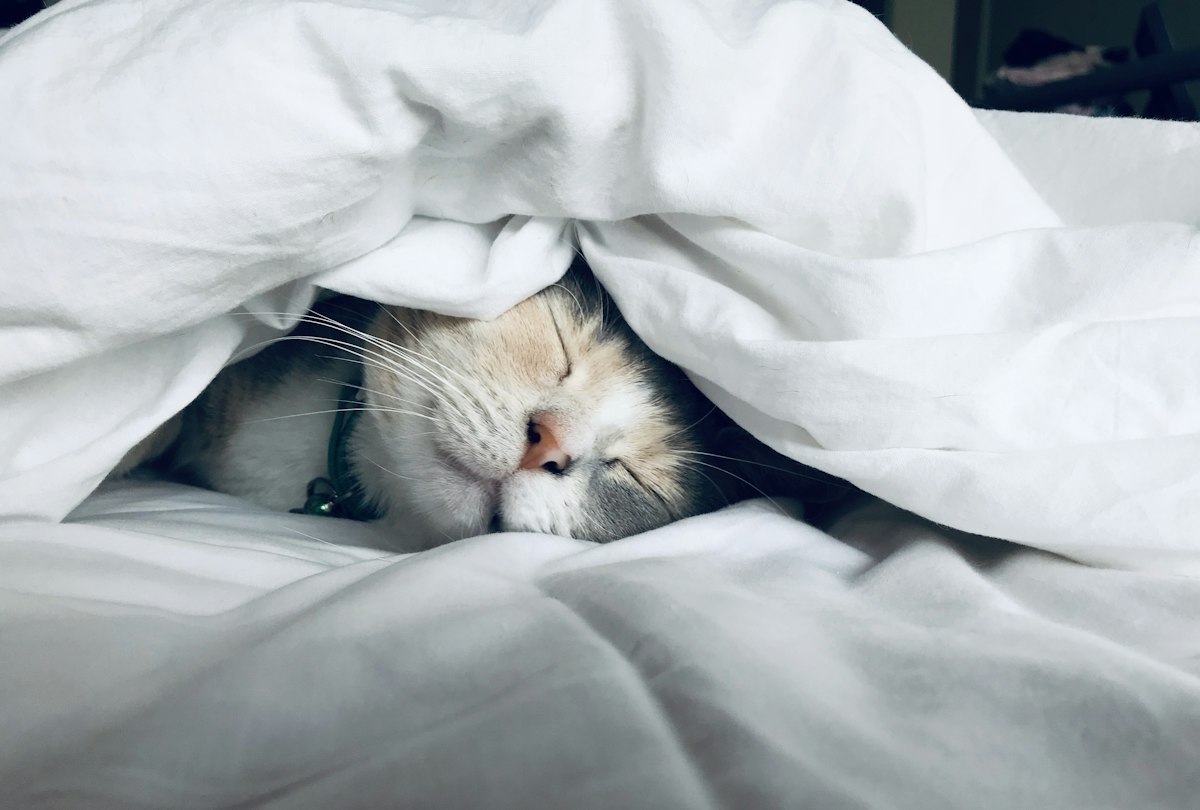
Person sleeping in on weekend -- social jet lag and optimal weekend sleep timing · Photo: Unsplash
Weekend Sleep Recovery — The Balancing Act
The weekend sleep dilemma is a real physiological trade-off: sleeping in provides some recovery from sleep debt, but sleeping in too much causes social jet lag — a circadian disruption that produces its own fatigue. Understanding how to balance these competing effects is the key to actually feeling better by Monday, rather than worse.
How Much Can You Actually Recover?
Research by Leproult and Van Cauter (2010) showed that two days of recovery sleep can restore testosterone, cortisol, and some cognitive measures after sleep restriction. However, a 2019 study in Current Biology by Depner et al. found that weekend recovery sleep did not fully reverse metabolic consequences (insulin sensitivity, weight gain trajectory) of weekday sleep restriction. The recovery is real but partial — and does not eliminate the case for consistent adequate weekday sleep.
The Social Jet Lag Trap
For every hour you sleep in later than your normal weekday wake time, you shift your circadian clock slightly later. Sleeping in 2 hours on Saturday is equivalent to flying west one time zone. On Sunday night, you then need to fall asleep at your normal weekday time despite a later-shifted clock — producing the Sunday night insomnia and Monday morning grogginess that many people experience chronically without understanding the mechanism.
Weekend Sleep — FAQ
Is it OK to sleep in on weekends?
Yes — with limits. Sleeping in up to 1 hour beyond your normal wake time provides some recovery benefit with minimal circadian disruption. Sleeping in 2+ hours causes measurable social jet lag. The sweet spot: a moderate sleep-in (30–60 min) on Saturday, maintaining close to normal wake time on Sunday to avoid disrupting Monday. If you're severely sleep-deprived, a Saturday afternoon nap (20–90 minutes) provides additional recovery without shifting the circadian clock.
Does weekend sleep actually help Monday performance?
Yes, but less than you'd hope. Studies consistently show that recovery sleep restores some subjective alertness and basic cognitive functions. More complex cognitive tasks — particularly working memory and executive function — recover more slowly and may still be impaired on Monday after a week of short sleep even with weekend recovery. The most reliable approach to Monday performance is actually Sunday night sleep — ensuring 7–9 hours Sunday night by maintaining a reasonable Sunday bedtime.
What's the best way to catch up on sleep?
The most effective strategy: (1) go to bed slightly earlier on Friday (30–60 min) rather than just sleeping later; (2) allow a moderate sleep-in Saturday (max 1h past normal wake time); (3) take a 20-minute power nap Saturday afternoon if still tired; (4) maintain near-normal wake time Sunday to protect Monday sleep onset. Avoid sleeping in massively on a single day — spreading recovery across Friday night through Sunday is more effective and causes less circadian disruption than one "sleep marathon."
📋 Reviewed by: MySleepTool Editorial Team · Last updated: July 2026 · Sources: Depner CM et al. "Ad libitum weekend recovery sleep fails to prevent metabolic dysregulation during a repeating pattern of insufficient sleep and weekend recovery sleep" Current Biology (2019), Wittmann M et al. "Social jetlag: misalignment of biological and social time" Chronobiology International (2006). Educational purposes only.