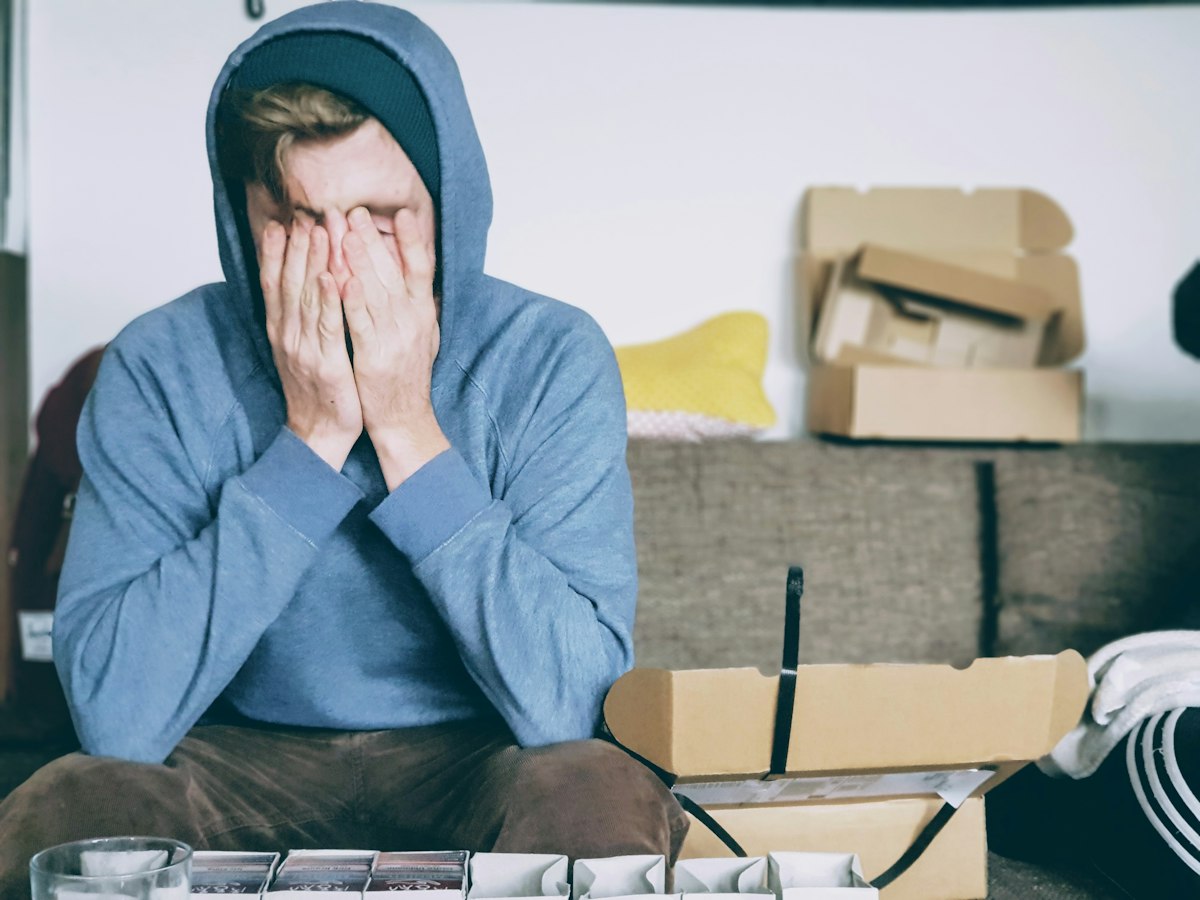
Anxiety and sleep problems are the two most common mental health complaints in primary care -- and they co-occur at extraordinarily high rates. Research suggests 50-70% of people with generalized anxiety disorder have significant sleep problems, and 30-40% of people with chronic insomnia have comorbid anxiety. This is not coincidental: the two conditions share neurobiological mechanisms and create a self-reinforcing cycle that worsens both unless specifically targeted.
This article covers the neuroscience of how anxiety disrupts sleep, how sleep deprivation amplifies anxiety, the specific sleep disturbances associated with different anxiety conditions, and evidence-based treatment approaches.
The Bidirectional Relationship -- How the Cycle Works
The anxiety-insomnia relationship operates in both directions simultaneously:
How anxiety disrupts sleep
Anxiety activates the sympathetic nervous system -- the "fight or flight" response -- elevating cortisol, norepinephrine, and heart rate. Sleep onset requires the opposite state: parasympathetic dominance, core body temperature drop, and accumulating adenosine pressure overcoming the alerting signal. When anxiety maintains sympathetic activation, these sleep-promoting changes are blocked or delayed.
Beyond sleep onset, anxiety alters sleep architecture throughout the night. Anxious people spend proportionally more time in light N1/N2 sleep and less time in restorative N3 slow-wave sleep. The persistent hyperarousal state produces "non-restorative sleep" -- you may sleep 7-8 hours by the clock but wake feeling unrested, because the sleep's restorative stages were curtailed.
How poor sleep amplifies anxiety
Research by Matthew Walker and colleagues at UC Berkeley demonstrated that a single night of poor sleep increased amygdala reactivity by approximately 60% the following day. The prefrontal cortex -- which normally provides "top-down" regulation of the amygdala's threat responses -- showed significantly reduced functional connectivity with the amygdala after sleep deprivation. The result: a sleep-deprived brain is neurobiologically more reactive to threat, more prone to catastrophic interpretation, and less able to regulate the resulting emotional response. This is not a personal weakness -- it is a predictable consequence of altered prefrontal-amygdala circuitry.
Anxiety Disorders and Their Specific Sleep Effects
Generalized Anxiety Disorder (GAD)
GAD produces chronic worry that is particularly disruptive to sleep because the rumination process intensifies in the absence of daytime distractions. People with GAD frequently describe lying awake with "racing thoughts" -- the cognitive component of hyperarousal that occupies the cognitive-verbal processing systems that should quiet as sleep approaches. GAD is associated with difficulty falling asleep, frequent nighttime waking, and non-restorative sleep.
Post-Traumatic Stress Disorder (PTSD)
PTSD produces some of the most severe sleep disruptions of any anxiety condition. Trauma-related nightmares -- particularly in REM sleep -- are a core diagnostic feature. Hypervigilance (the persistent sense of threat) makes deep sleep difficult because the nervous system remains partially activated. Sleep deprivation worsens emotional regulation and flashback frequency, creating an especially damaging cycle. Standard CBT-I is helpful for sleep initiation problems in PTSD, but trauma-focused approaches (EMDR, prolonged exposure) and Imagery Rehearsal Therapy for nightmares are needed for the trauma-specific components.
Panic Disorder
Nocturnal panic attacks -- panic attacks that occur during sleep, typically in the transition from N2 to N3 -- affect a significant minority of panic disorder patients and are a particularly distressing form of sleep disruption. Unlike nightmares, nocturnal panic attacks do not involve dream content; they arise from the physiological vigilance and arousal sensitivity characteristic of panic disorder. They require specific psychiatric evaluation and treatment.
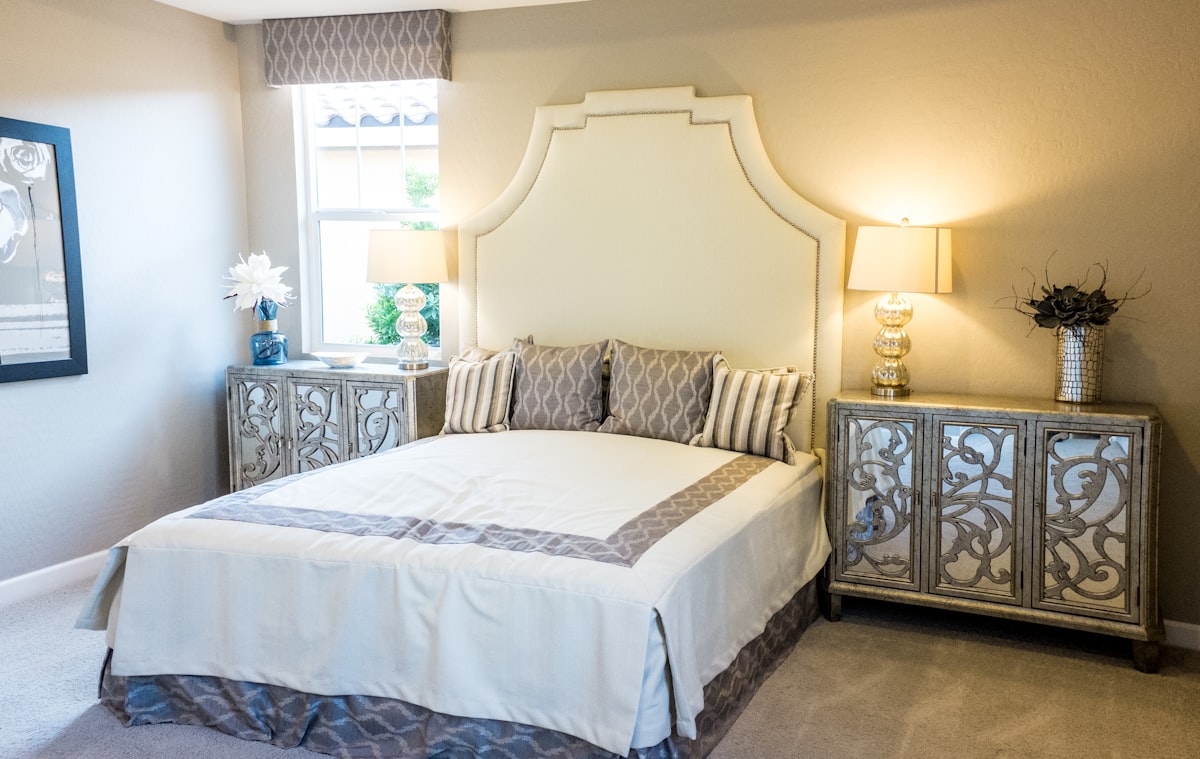
Creating a sleep environment associated with calm rather than effort reduces the conditioned arousal that perpetuates sleep anxiety. Photo: Unsplash
Breaking the Cycle -- Treatment Approaches
CBT-I for the sleep component
Cognitive Behavioral Therapy for Insomnia (CBT-I) is the first-line recommended treatment for insomnia including anxiety-related insomnia, per the American College of Physicians, AASM, and European Sleep Research Society. Its components directly target the learned hyperarousal and behavioral patterns that maintain anxiety-driven insomnia:
- Stimulus control: Rebuilds the bed-sleep association by removing wakefulness from the bedroom
- Sleep restriction: Temporarily restricts time in bed to consolidate sleep and build sleep pressure
- Cognitive restructuring: Challenges catastrophic beliefs about sleep and its consequences
- Relaxation training: Reduces physiological hyperarousal through PMR, breathing, and imagery
- Sleep hygiene education: Addresses behavioral factors maintaining the problem
CBT-I achieves remission rates of 70-80% in controlled studies, with improvements persisting at 1-3 year follow-up. This significantly outperforms medications (30-50% response, with rebound insomnia on discontinuation). Use our CBT-I Calculator to find your prescribed sleep window for self-directed sleep restriction.
Anxiety treatment -- the upstream approach
Treating the underlying anxiety improves sleep as a secondary benefit. Evidence-based anxiety treatments with documented sleep improvement benefits:
- CBT-A (Cognitive Behavioral Therapy for Anxiety) -- reduces the worry and cognitive hyperarousal that drives insomnia
- SSRI/SNRI medications -- when anxiety is severe, pharmacological treatment reduces baseline arousal that impairs sleep onset and maintenance
- Mindfulness-Based Stress Reduction (MBSR) -- reduces the reactivity to anxious thoughts that escalates at bedtime
- Regular aerobic exercise -- one of the most effective evidence-based anxiety reducers, with direct sleep quality benefits
Targeting both simultaneously
Research by Harvey et al. and others has shown that treating both anxiety and insomnia concurrently produces better outcomes for both than treating either in isolation. The bidirectional relationship means that improvements in one condition directly reduce symptoms in the other. A combined approach -- CBT-I plus anxiety-specific treatment -- is the most efficient path to resolution.
Practical Immediate Strategies
While building toward formal treatment (or while waiting for access), these evidence-supported strategies can reduce the impact of the anxiety-sleep cycle:
- Scheduled worry time: A 15-minute daily "worry period" in the late afternoon reduces bedtime rumination by providing a legitimate processing outlet earlier in the day
- 4-7-8 breathing: Inhale 4 counts, hold 7, exhale 8 -- activates parasympathetic response within 2-3 repetitions. Use our Breathing Timer for guided practice.
- Cognitive defusion: Labeling anxious thoughts as "thoughts" rather than facts -- "I notice I'm having the thought that I won't sleep" rather than "I won't sleep" -- reduces their emotional impact
- Stimulus control: Getting out of bed after 20 minutes of anxious wakefulness -- don't let the bed become associated with anxiety
- Temperature reduction: A cool bedroom (65-68F) reduces the physiological arousal that anxiety maintains, facilitating sleep onset

Breaking the anxiety-insomnia cycle restores the bed as a place of rest rather than worry. Photo: Unsplash