REM Sleep Calculator
Find out exactly when you enter REM sleep each cycle tonight — and how much total REM you'll get based on your bedtime and cycles.
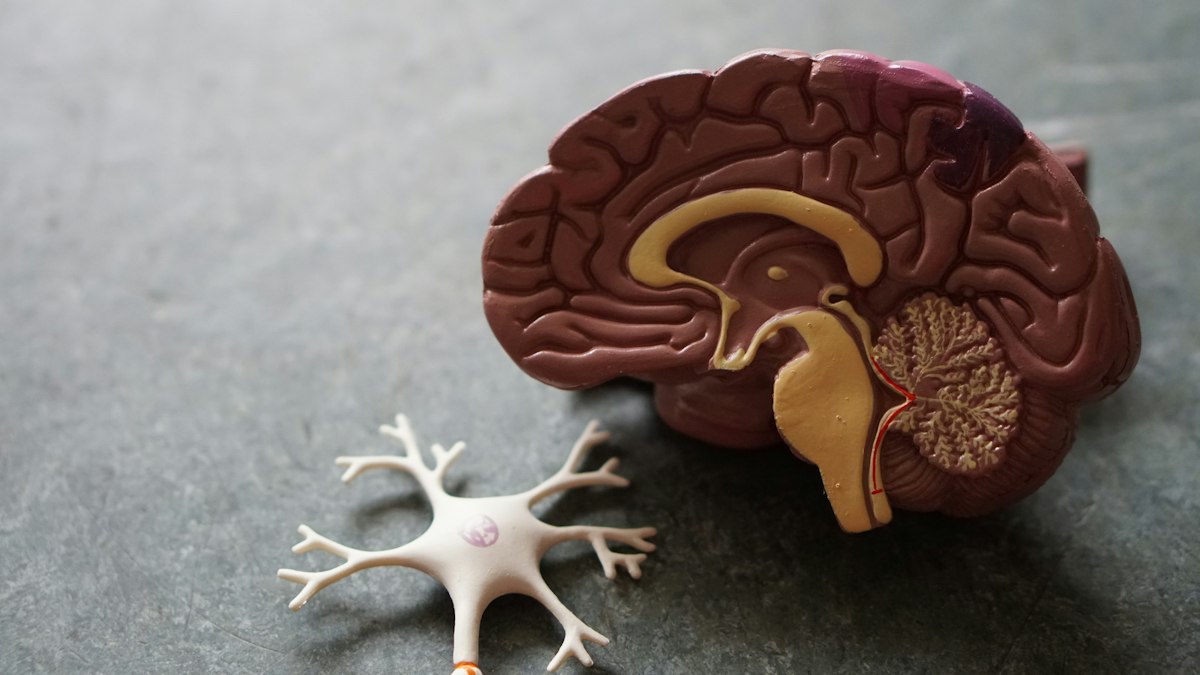
Abstract brain imagery representing REM sleep and memory consolidation · Photo: Unsplash
REM Sleep — The Complete Science Guide
REM (Rapid Eye Movement) sleep is one of the most scientifically fascinating and functionally critical stages of sleep. Discovered by Eugene Aserinsky and Nathaniel Kleitman in 1953, REM sleep is characterized by a paradox: your brain is highly active — producing electrical patterns nearly identical to waking consciousness — while your body is in a state of temporary paralysis. This is the stage where most dreaming occurs, but its functions go far beyond dreams.
What Happens to Your Brain During REM Sleep
During REM sleep, multiple brain regions activate simultaneously. The limbic system — particularly the amygdala and hippocampus — is highly active, processing emotionally charged memories from the day. The prefrontal cortex, responsible for rational thinking and impulse control, is relatively suppressed during REM — which may explain why dream logic feels coherent in the moment but bizarre in retrospect.
Acetylcholine, the neurotransmitter associated with learning and alertness, peaks during REM. Serotonin and norepinephrine — associated with emotional regulation and attention — are almost completely suppressed. This unique neurochemical environment is thought to create the conditions for emotional memory processing: memories can be accessed and re-encoded, but the emotional charge can be moderated by the absence of stress neurochemicals. This is the neurobiological basis for the folk wisdom "sleep on it" — REM sleep literally processes difficult memories in a low-stress chemical environment.
REM Sleep and Memory Consolidation
Research from the Walker Lab at UC Berkeley has demonstrated that REM sleep plays a critical role in procedural memory (motor skills, musical instrument learning, language acquisition) and emotional memory processing. A landmark study found that subjects who were REM-deprived between learning sessions and testing showed significantly worse performance than those with intact REM — even when total sleep time was equivalent, showing that REM specifically (not just total sleep time) was responsible for the consolidation.
REM sleep also appears to be essential for creative problem-solving. Studies have shown that waking people after REM sleep produces better performance on problems requiring novel connections between disparate concepts — what researchers call "relational memory" — compared to waking after NREM sleep or no sleep. The loosely associative dreaming mind appears to serve a real cognitive function during REM.
Why REM Sleep Is Most Vulnerable to Disruption
REM sleep is concentrated in the second half of the night. The first sleep cycle (approximately 10–11 PM to midnight for a 10 PM bedtime) may contain only 10–15 minutes of REM. By cycles 4 and 5 (3–7 AM), individual REM periods can last 40–60 minutes. This means that cutting sleep short has a disproportionate impact on REM:
- Sleeping 6 hours instead of 8 hours doesn't lose 25% of your REM — it can eliminate 50–60% of your total REM sleep
- A single night of significant alcohol consumption suppresses REM in the first half of the night — producing a "REM rebound" in the second half that results in disturbing dreams
- SSRIs and SNRIs (common antidepressants) significantly suppress REM throughout the night, which may contribute to emotional blunting reported by some users
- Cannabis and THC suppress REM sleep — explaining why heavy users often report vivid, disturbing dreams during cannabis withdrawal (REM rebound)
REM Sleep Behavior Disorder (RBD)
Normally during REM sleep, the body is in atonia — a temporary paralysis that prevents physical enactment of dreams. In REM Sleep Behavior Disorder, this atonia fails, causing people to physically act out their dreams — talking, shouting, kicking, or punching. RBD is diagnosed by polysomnography and is a significant risk factor for later development of Parkinson's disease and other synucleinopathies. If a bed partner describes you acting out dreams or you've injured yourself during sleep, consult a sleep specialist.
How to Maximize Your REM Sleep
The most effective strategies for protecting and maximizing REM sleep are straightforward:
- Protect the last 2 cycles: Don't cut sleep short — the final cycles are disproportionately REM-rich
- Eliminate or minimize alcohol: The single biggest suppressant of REM sleep
- Consistent sleep schedule: Irregular schedules disrupt the circadian timing of REM
- Treat sleep apnea: Repeated arousals fragment REM periods throughout the night
- Discuss medications: If on SSRIs/SNRIs and experiencing mood issues or unusual dream patterns, ask your doctor about REM suppression
- Avoid cannabis before bed: Regular cannabis use before bed significantly suppresses REM over time