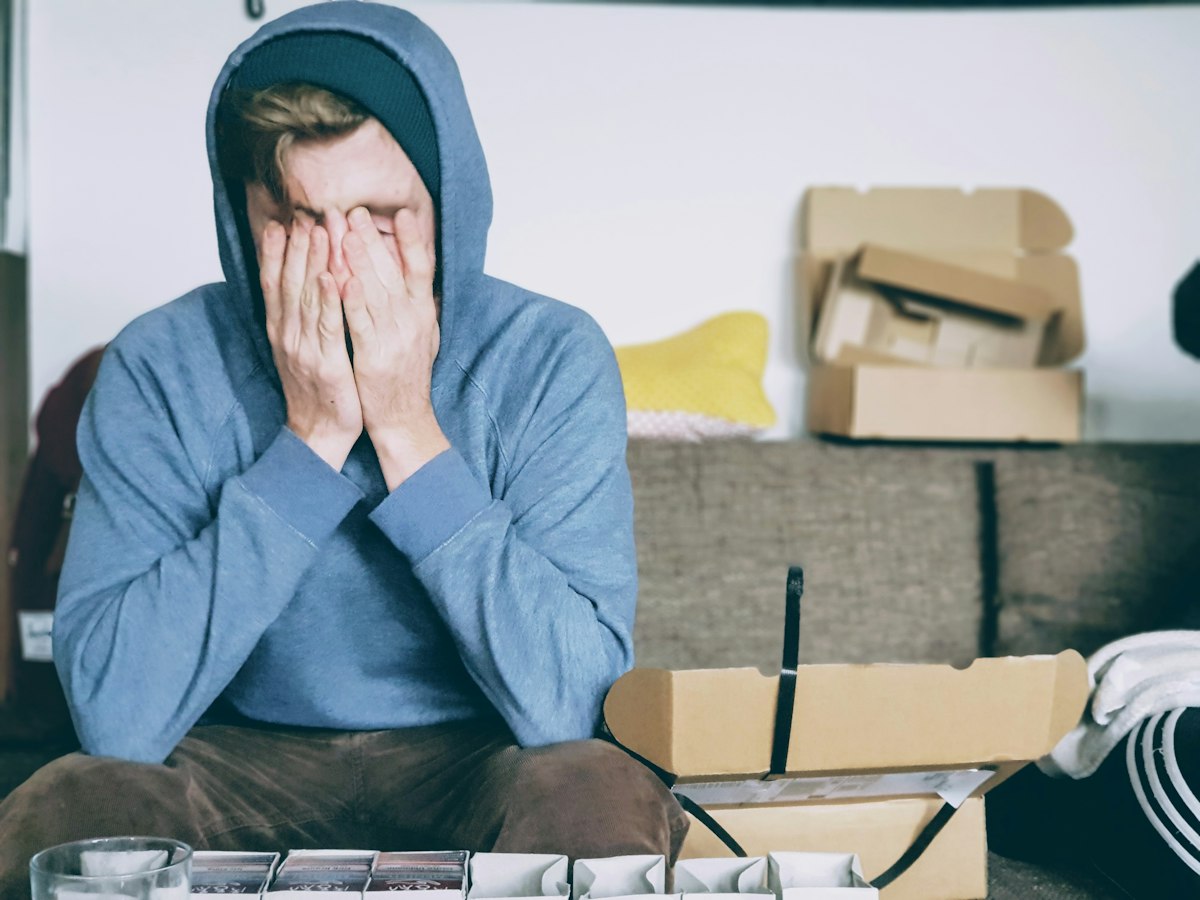
Anxiety and sleep problems form one of the most frustrating bidirectional cycles in mental health. Anxiety makes sleep harder to achieve; poor sleep increases anxiety and reduces emotional regulation the following day, making anxiety worse. Understanding how to interrupt this cycle — using evidence-based techniques rather than willpower — is the key to sleeping better with anxiety.
This guide covers the neuroscience of why anxiety disrupts sleep, the most effective behavioral and cognitive techniques for falling asleep despite anxiety, and when to seek professional support.
Why Anxiety Disrupts Sleep — The Neuroscience
Anxiety activates the sympathetic nervous system — the "fight or flight" system — elevating cortisol, norepinephrine, and heart rate. Sleep onset requires the opposite: parasympathetic dominance, core temperature drop, and adenosine buildup overcoming the alerting signal. When anxiety maintains sympathetic activation, these sleep-promoting changes are blocked or delayed.
The relationship is bidirectional and self-reinforcing. Research by Matthew Walker showed that a single night of poor sleep increases amygdala reactivity (the brain's threat-detection center) by approximately 60% the following day — meaning you enter the next night more anxious, creating a worsening cycle without intervention.
Sleep anxiety — a specific subtype
Sleep anxiety is anxiety about the act of sleeping itself — worrying about not falling asleep, not staying asleep, or the consequences of a bad night. It's a learned hyperarousal response that becomes self-fulfilling: the effort to try to sleep activates arousal, preventing sleep. This is why "trying harder to sleep" reliably makes sleep worse. The paradox is counterintuitive but well-established in sleep medicine.
Technique 1 — 4-7-8 Breathing
The 4-7-8 breathing technique (inhale for 4 counts, hold for 7, exhale for 8) is one of the fastest methods for reducing physiological arousal at bedtime. The extended exhale activates the parasympathetic nervous system via the vagus nerve, reducing heart rate and cortisol. The breath hold creates a mild CO2 accumulation that has a calming effect on the nervous system.
Practice this in bed with eyes closed: inhale through the nose for 4 seconds, hold for 7 seconds, exhale slowly through the mouth for 8 seconds. Repeat 4 cycles. Most people notice a measurable reduction in physiological tension within 2–3 repetitions. Use our Breathing Timer for guided practice.
Technique 2 — Progressive Muscle Relaxation (PMR)
Progressive muscle relaxation systematically tenses and releases each muscle group from feet to head, creating deep physical relaxation. The mechanism: voluntary muscle tension followed by release produces a rebound relaxation deeper than the resting baseline — the "rebound effect." PMR also provides a structured attentional task that occupies the mind without being stimulating, reducing cognitive hyperarousal.
A basic PMR sequence: starting with feet, tense each muscle group firmly for 5–7 seconds, then release completely for 20–30 seconds before moving up the body. Complete the full sequence in 15–20 minutes. Research shows PMR reduces sleep onset time by an average of 12 minutes in anxiety patients.
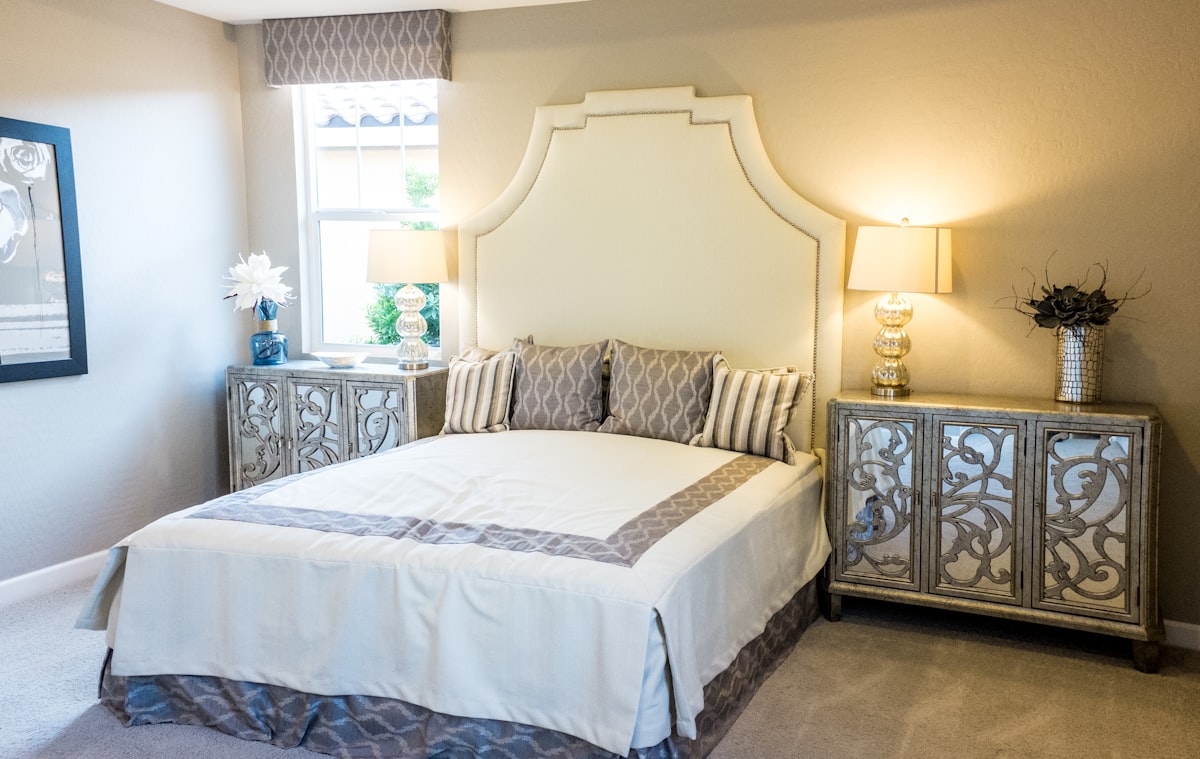
A calm sleep environment supports relaxation techniques — darkness and quiet enhance their effectiveness. Photo: Unsplash
Technique 3 — Stimulus Control (CBT-I Foundation)
Stimulus control is the most evidence-based behavioral intervention for anxiety-driven insomnia. The principle: bed should be associated exclusively with sleep (and sex) — not with wakefulness, anxiety, or screens. When you lie awake anxious in bed regularly, you create a conditioned association between bed and arousal that makes sleep harder to achieve over time.
The rules of stimulus control:
- Go to bed only when genuinely sleepy (drowsy, not just tired or anxious)
- If awake for more than 20 minutes, get out of bed and go to another room
- Do something calm in dim light (reading a physical book, gentle stretching) until sleepy, then return
- Repeat as often as needed during the night
- Maintain a consistent wake time regardless of how little you slept
The first week of stimulus control is harder — you may spend more time out of bed initially. But within 1–2 weeks, the bed-sleep association rebuilds and sleep onset improves significantly.
Technique 4 — Cognitive Restructuring
Cognitive restructuring targets the catastrophic thoughts about sleep that perpetuate anxiety — "I'll never sleep again," "I'll be destroyed tomorrow," "I always sleep badly." These thoughts activate the stress response, making sleep less likely. The restructuring process:
- Identify the thought: "I haven't slept in hours and I'm going to be useless tomorrow."
- Examine the evidence: "Have I functioned before after poor sleep? Yes. Have I actually been destroyed? No."
- Generate a realistic alternative: "I'll be tired tomorrow but I'll manage. One bad night doesn't ruin everything."
Research shows that catastrophic sleep cognitions are more predictive of insomnia severity than actual sleep duration. Addressing the thoughts directly — not just the behaviors — is essential for lasting improvement.
Technique 5 — Paradoxical Intention
Paradoxical intention is a counterintuitive but effective CBT-I technique for sleep onset anxiety: instead of trying to fall asleep, deliberately try to stay awake with eyes open. This removes the performance pressure of sleep effort — which, paradoxically, is what was keeping you awake. Research shows this technique significantly reduces sleep onset time in patients with sleep onset anxiety.
What Not to Do With Sleep Anxiety
- Checking the clock: Clock-watching intensifies sleep anxiety by quantifying time lost and triggering calculations about remaining sleep. Turn clocks away from the bed.
- Alcohol: While alcohol reduces anxiety acutely and helps sleep onset, it suppresses REM sleep and produces a cortisol rebound 4–5 hours later that wakes you with worse anxiety than before.
- Lying in bed trying harder: Sleep effort creates arousal. Paradoxical intention and stimulus control both work by removing sleep effort — the opposite of what most people do.
- Napping to compensate: Daytime napping reduces sleep pressure, making anxiety-driven sleep onset harder that night. During CBT-I treatment, napping is contraindicated.

Breaking the anxiety-insomnia cycle requires addressing both the thoughts and the behaviors that maintain it. Photo: Unsplash
When to Seek Professional Help
The behavioral and cognitive techniques described in this guide are effective for most people with anxiety-related sleep difficulties. However, some presentations require professional intervention:
- Insomnia lasting more than 3 months: Chronic insomnia (defined as difficulty sleeping at least 3 nights/week for 3+ months) responds best to structured CBT-I delivered by a trained therapist or via validated digital programs (Sleepio, Insomnia Coach VA app)
- Generalized anxiety disorder: When anxiety significantly impairs daily functioning beyond sleep, formal psychological treatment (CBT-A, medication, or both) is warranted and will improve sleep as a secondary outcome
- PTSD-related nightmares: Imagery Rehearsal Therapy (IRT) and Prazosin have specific evidence for trauma-related sleep disruption and are different from standard CBT-I
- Panic attacks during sleep: Nocturnal panic attacks are a distinct clinical presentation requiring psychiatric evaluation
A useful threshold: if anxiety is preventing you from functioning normally during the day -- not just affecting sleep -- professional support is appropriate. Anxiety disorders are among the most treatable mental health conditions, with response rates above 80% for evidence-based treatments.
Lifestyle Factors That Reduce Sleep Anxiety
Beyond the in-bed techniques described above, several daily habits systematically reduce the baseline anxiety load that makes bedtime difficult:
Scheduled worry time
A counter-intuitive but highly effective CBT technique: schedule a daily 15-20 minute "worry period" in the late afternoon or early evening. During this time, actively write down all current worries and concerns. When anxious thoughts arise at bedtime, remind yourself: "I already worried about that at 5 PM. There's nothing new to process now." This technique works because it gives anxiety a legitimate outlet -- reducing the brain's compulsion to process worries at bedtime when it has no other outlet.
Morning anxiety management
Anxious people often have elevated morning cortisol that sets the tone for a high-anxiety day that culminates in difficult nighttime sleep. Morning practices that reduce baseline anxiety: 10-15 minutes of mindfulness or meditation immediately on waking, physical exercise (even a 15-minute walk), journaling, and social connection. These reduce the cumulative anxiety load that arrives at bedtime.
Evening news and social media
News and social media in the 2 hours before bed are among the most potent anxiety-elevating inputs available, producing both cognitive activation (interfering with sleep onset through mental stimulation) and emotional arousal (anxiety-inducing content). A firm "news blackout" from 9 PM onward dramatically reduces pre-bed cognitive arousal for many people. The content can wait until morning -- it will still be there, and you will process it better after sleep than in an exhausted, less emotionally regulated state.
Long-Term Outlook
Anxiety-related insomnia, while uncomfortable and frustrating, is one of the most treatable presentations in sleep medicine. CBT-I achieves remission rates of 70-80% in controlled studies, including in populations with concurrent anxiety disorders. The behavioral techniques described in this guide -- stimulus control, sleep restriction, cognitive restructuring, relaxation training -- have been shown to produce durable improvements that persist at 1-3 year follow-up without ongoing treatment. The investment in learning and applying these techniques pays dividends well beyond sleep.