
Deep sleep -- the N3 slow-wave sleep stage -- is the most physically restorative phase of your sleep. It is when growth hormone is released, tissue repairs, the immune system strengthens, and the brain clears metabolic waste via the glymphatic system. People who get less deep sleep wake feeling less refreshed, recover more slowly from physical activity, are more susceptible to illness, and accumulate greater Alzheimer's-related protein burden over time.
The good news: deep sleep is significantly affected by lifestyle factors that can be modified. This guide covers the 12 most evidence-supported methods to increase N3 sleep duration and quality.
What Happens During Deep Sleep
N3 slow-wave sleep is characterized by high-amplitude, low-frequency delta waves (0.5-4 Hz) and is the stage most difficult to wake from. It is concentrated in the first two sleep cycles (the first 3 hours of sleep) and becomes progressively rarer in later cycles. This is why the first part of the night -- specifically the first half -- contains most of your deep sleep, and why cutting sleep short or going to bed late disproportionately reduces total N3.
During N3, the body releases 70-80% of daily growth hormone, drives the most active immune cell production, consolidates declarative memories through hippocampal replay, and activates the glymphatic system to clear beta-amyloid and tau proteins. Waking from N3 produces the most severe sleep inertia (grogginess) because the brain is in its most deeply resting state.
Method 1 -- Cool Your Bedroom to 65-68F
Bedroom temperature is the single most impactful environmental factor for N3 deep sleep. Core body temperature drop is a biological prerequisite for entering slow-wave sleep -- the brain initiates N3 only when core temperature has fallen sufficiently. A bedroom above 70F slows or prevents this temperature drop, significantly reducing N3 duration and depth.
Research consistently shows that sleeping in a 65-68F environment produces measurably more slow-wave sleep than sleeping at 72F or above. This is achievable through air conditioning, a bedroom fan directed at the body, cooling mattress pads or toppers (especially effective for people who run hot), and sleeping with fewer covers than feels initially comfortable. Use our Bedroom Temperature Calculator for personalized guidance.
Method 2 -- Eliminate Alcohol
Alcohol is the most powerful dietary suppressor of deep sleep available. Even moderate alcohol consumption (1-2 drinks) measurably reduces N3 duration that night. The mechanism: alcohol metabolizes to acetaldehyde, which specifically disrupts the slow oscillations that characterize N3 sleep. Even after the alcohol is fully metabolized, the suppressed N3 is not fully recovered within the same night.
The impact is dose-dependent and has no "safe" threshold -- even small amounts reduce N3 somewhat. For people who drink regularly and feel chronically unrested, eliminating alcohol for 2 weeks is the fastest available intervention for increasing deep sleep. The subjective improvement in sleep quality and morning refreshment after alcohol cessation is often dramatic and immediate.
Method 3 -- Exercise Regularly
Regular aerobic exercise is one of the most reliable methods for increasing slow-wave sleep. The mechanism: exercise accelerates adenosine accumulation -- the metabolic byproduct that drives sleep pressure. Higher adenosine at bedtime produces more N3 sleep early in the night. Research shows regular exercisers have significantly more slow-wave sleep than sedentary controls, with the benefit beginning within the first week of starting an exercise routine.
The timing matters: morning or afternoon exercise maximizes the N3 benefit through adenosine buildup across the full day. Evening high-intensity exercise should finish 2+ hours before bed to allow temperature and cortisol normalization. Use our Exercise Sleep Planner for a personalized exercise-timing plan.

Aerobic exercise is one of the most reliable lifestyle interventions for increasing slow-wave deep sleep. Photo: Unsplash
Method 4 -- Maintain Consistent Sleep Timing
Irregular sleep timing disrupts the homeostatic pressure that drives N3 sleep. When you go to bed and wake at variable times, the brain does not build the predictable pattern of adenosine accumulation that maximizes slow-wave sleep. Consistent bedtime and wake time -- including weekends -- produces more predictable and deeper N3 sleep within 1-2 weeks of implementation. The wake time is the more powerful anchor -- fix it first.
Method 5 -- Eliminate Caffeine After 2 PM
Caffeine blocks adenosine receptors for 5-7 hours. A coffee consumed at 3 PM means 25% of the caffeine is still active at midnight, competing with adenosine at the receptors that signal deep sleep onset. Even when caffeine doesn't prevent sleep onset, it reduces N3 duration by dampening the adenosine signal. A 2022 study confirmed that 400mg caffeine consumed 6 hours before bed significantly reduced sleep quality, with N3 most affected. Use our Caffeine Calculator to find your personal cutoff time.
Method 6 -- Warm Bath 1-2 Hours Before Bed
A warm bath or shower 60-90 minutes before bed raises peripheral skin temperature, which triggers the body to dissipate heat and produce a core temperature drop -- the same thermal signal that initiates N3 sleep. A 2019 meta-analysis by Haghayegh et al. found that warm bathing in this window reduced sleep onset time by 10 minutes and increased slow-wave sleep duration. The effect is particularly robust for people who have difficulty achieving deep sleep in warmer environments.
Method 7 -- Manage Stress and Anxiety
Stress and anxiety maintain physiological hyperarousal -- elevated cortisol, sympathetic nervous system activation, elevated core temperature -- that specifically opposes N3 sleep. The brain enters slow-wave sleep only when the stress response is adequately quieted. Stress management techniques that specifically reduce pre-sleep physiological arousal (progressive muscle relaxation, 4-7-8 breathing, mindfulness) directly increase N3 by allowing the nervous system to reach the calm state required for deep sleep initiation. Use our Breathing Timer for guided pre-sleep relaxation.
Method 8 -- Reduce or Eliminate Sleep Medications
Several commonly prescribed sleep medications suppress N3 deep sleep despite helping with sleep onset. Benzodiazepines (Valium, Xanax, Klonopin) and Z-drugs (Ambien, Lunesta, Zopiclone) sedate the nervous system but suppress the slow oscillations of N3 sleep -- you sleep but lose the most restorative stage. If you are using these medications for chronic insomnia, discuss CBT-I as an alternative with your physician. CBT-I achieves better long-term outcomes without suppressing sleep architecture. Discuss any medication changes with your doctor before making them.
Method 9 -- Create Complete Darkness
Light -- even low-level light from electronics or streetlights leaking through curtains -- suppresses melatonin and maintains a mild alerting signal that can reduce N3 depth without preventing sleep onset. Complete darkness or the use of a sleep mask removes this suppression and allows deeper N3 penetration. Research shows sleeping in complete darkness produces measurably more slow-wave sleep than sleeping with ambient light.
Method 10 -- Magnesium Glycinate
Magnesium modulates GABA receptors -- the brain's main inhibitory system -- and plays a direct role in the regulation of deep sleep. Magnesium deficiency (affecting an estimated 68% of Americans) is associated with reduced N3 sleep. Supplementation with magnesium glycinate (200-400mg before bed, the most bioavailable form) has shown evidence for improving deep sleep quality in several controlled trials. It is well-tolerated, widely available, and carries minimal risk at recommended doses. Discuss with your physician before starting supplements, particularly if you have kidney disease.
Method 11 -- Protect Your First 4 Hours of Sleep
N3 deep sleep is concentrated in the first half of the night -- specifically the first two 90-minute cycles. Protecting these first 4 hours from disruption is the highest-leverage strategy for maximizing total N3 time. This means: consistent, early enough bedtime to allow 4 hours of protected sleep before typical disruption windows; no alcohol (which disrupts the first 4 hours most severely); a cool, dark, quiet bedroom during this critical window; and no high-stress activities close to bedtime that maintain cortisol elevation into the first cycles.
Method 12 -- Treat Sleep Apnea
If you have undiagnosed or untreated sleep apnea, treating it is the single most impactful intervention for increasing deep sleep. Repeated micro-arousals from airway events continuously interrupt N3 sleep, preventing the long, uninterrupted slow-wave episodes that provide most of the restorative benefit. CPAP treatment in moderate-to-severe sleep apnea dramatically increases N3 duration -- often producing the first truly restorative sleep patients have had in years. Use our Sleep Apnea Risk Calculator to assess whether this applies to you.
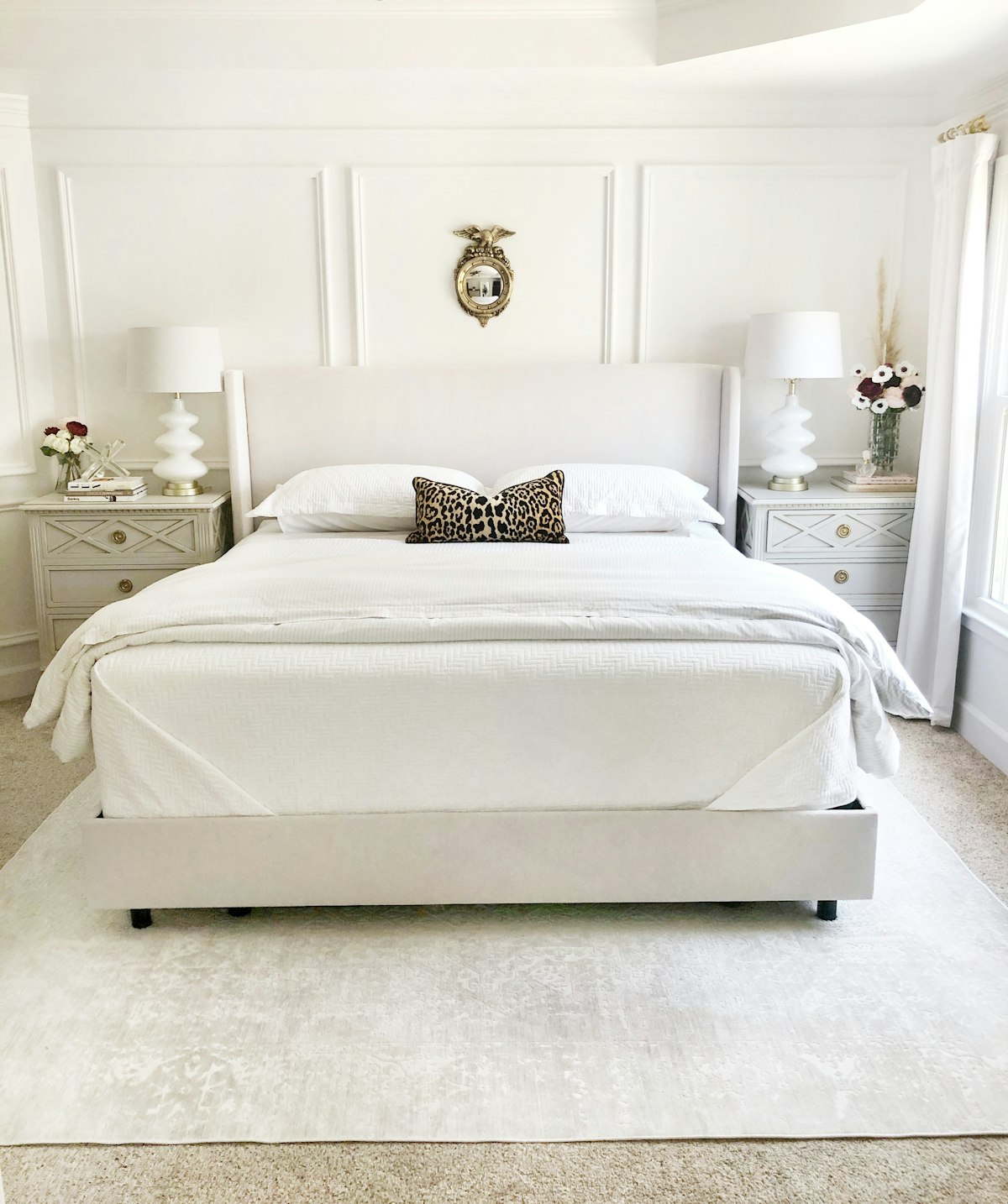
A bedroom at 65-68F with complete darkness and no disruptive sound is the highest-leverage deep sleep environment. Photo: Unsplash