
Exercise is one of the most reliable and evidence-supported behavioral interventions for improving sleep quality available without a prescription. The research is consistent across populations, exercise types, and age groups: regular physical activity improves sleep, and sedentary lifestyles worsen it. But the timing and intensity of exercise matter significantly -- the same workout can enhance sleep if done in the morning or impair it if done too close to bedtime.
How Exercise Improves Sleep -- The Mechanisms
Exercise improves sleep through several simultaneous mechanisms that compound over days and weeks:
Adenosine and sleep pressure
Physical activity accelerates the buildup of adenosine -- the metabolic byproduct of neural and muscular activity that drives sleep pressure (the biological "need" to sleep). Higher adenosine levels at bedtime mean faster sleep onset and more slow-wave deep sleep early in the night. This is the same adenosine that caffeine blocks -- which is why exercise and caffeine have opposing effects on sleepiness.
Core body temperature
Exercise raises core body temperature by 1-3 degrees Fahrenheit. In the hours following exercise, core temperature drops back to baseline -- and this temperature descent is one of the key physiological triggers for sleep onset. When exercise is timed correctly (ending 2+ hours before bed), the temperature drop occurs precisely when you want to fall asleep, facilitating sleep onset. When exercise is too close to bed, the temperature is still elevated at lights-out, delaying onset.
Cortisol regulation
Regular exercise normalizes cortisol rhythms -- the cortisol pattern that should peak in the morning (providing alertness) and be low by evening (allowing sleep). Sedentary lifestyles disrupt this pattern, producing elevated evening cortisol that delays sleep. Over weeks of regular exercise, cortisol patterns normalize, improving both daytime alertness and nighttime sleep quality.
Anxiety and depression reduction
Both anxiety and depression significantly impair sleep quality -- and exercise is one of the most effective evidence-based treatments for both. Regular aerobic exercise reduces anxiety by depleting circulating catecholamines and increasing GABA activity. It reduces depression through multiple neurobiological mechanisms including BDNF (brain-derived neurotrophic factor) upregulation. Improving mood and reducing anxiety indirectly but significantly improves sleep quality.
The Best Time to Exercise for Sleep
Morning exercise (6-10 AM) -- the strongest sleep benefit
Morning exercise provides the maximum sleep benefit for three reasons: adenosine accumulation begins early and builds to a maximum by bedtime; morning outdoor light during the workout provides strong circadian anchoring (reinforcing the wake signal and timing melatonin release appropriately for the evening); and the cortisol released by morning exercise is part of the natural morning cortisol pattern rather than an inappropriate evening spike.
Research by Fairbrother et al. showed that morning exercisers had significantly higher amounts of deep slow-wave sleep and REM sleep compared to afternoon and evening exercisers.
Afternoon exercise (1-4 PM) -- good for most people
Afternoon exercise coincides with the natural peak in muscle strength, flexibility, and cardiovascular efficiency (the body's peak performance window). It allows sufficient time for temperature normalization before bed and doesn't interfere with morning light exposure. For people who cannot exercise in the morning, this is the optimal alternative.
Evening exercise -- intensity matters
Evening exercise (after 6 PM) is where the rules become more nuanced. Moderate-intensity exercise (walking, light jogging, yoga, swimming) ending 60-90 minutes before bedtime is generally well-tolerated and may even help some people fall asleep by reducing pre-bed anxiety. High-intensity exercise (HIIT, heavy weightlifting, sprinting) within 2 hours of bedtime consistently delays sleep onset and reduces sleep quality in research -- through elevated core temperature, cortisol, and sympathetic nervous system activation that take time to resolve.
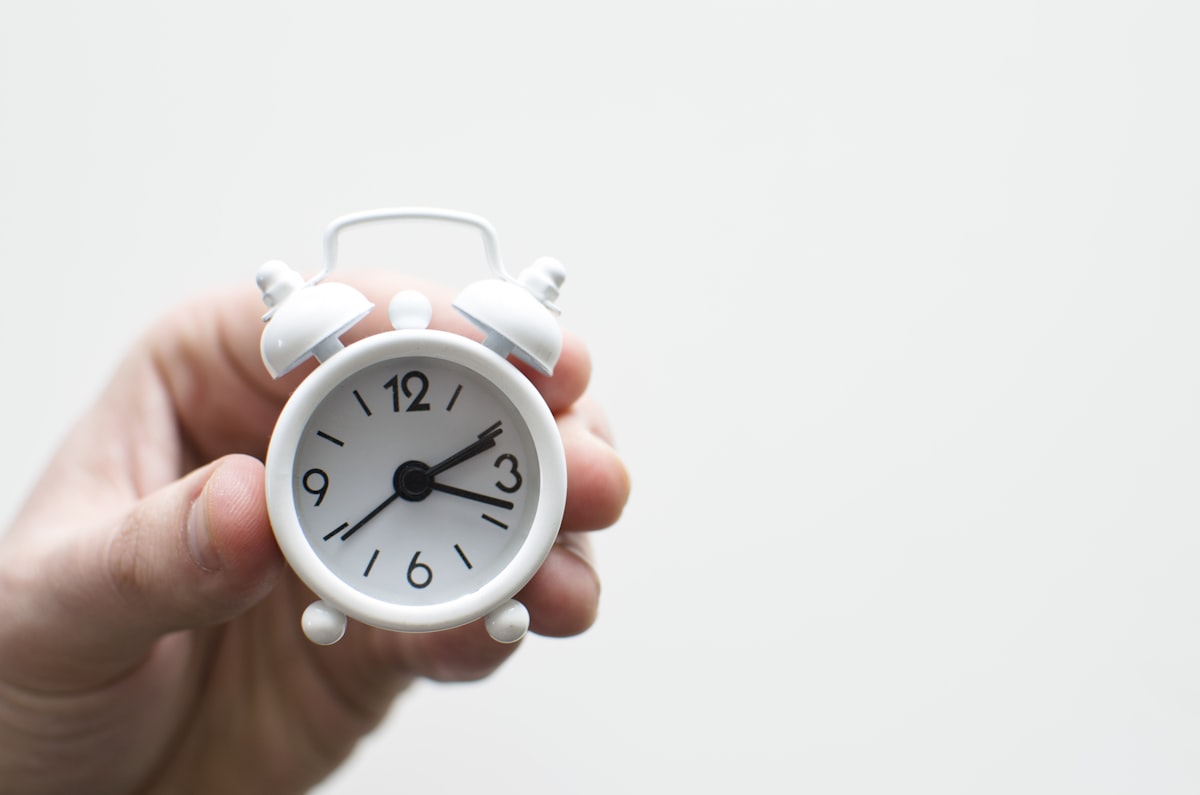
Timing your exercise correctly relative to your bedtime is as important as the exercise itself. Photo: Unsplash
How Much Exercise Improves Sleep?
The research-supported minimum for meaningful sleep improvement: 150 minutes of moderate aerobic exercise per week, distributed across at least 3 days. This is the same amount recommended by the American Heart Association for cardiovascular health -- sleep benefits are an additional dividend of meeting this threshold.
A meta-analysis by Kredlow et al. (2015) covering 66 studies found that regular exercise:
- Reduced sleep onset time by an average of 13 minutes
- Increased total sleep time by an average of 18 minutes
- Improved sleep efficiency by approximately 5%
- Reduced daytime fatigue scores by 65%
These are averages -- beginners and people with insomnia tend to see larger benefits than already-active, healthy sleepers.
Overtraining and Sleep -- When Too Much Hurts
While regular moderate exercise consistently improves sleep, overtraining syndrome -- excessive training volume without adequate recovery -- paradoxically disrupts sleep. The mechanism: chronic exercise stress elevates baseline cortisol levels, which suppresses melatonin production and disrupts sleep architecture. Overtraining produces insomnia, early waking, and non-restorative sleep -- symptoms that improve only with reduced training load and increased rest.
Sleep quality decline is one of the earliest markers of overtraining and should be taken seriously as a signal to reduce training intensity. Use our Athlete Sleep Calculator to find the appropriate sleep target for your training load.

Quality sleep after exercise is when adaptation and recovery actually occur. Photo: Unsplash
Sleep IS the Recovery -- Not Rest Time
A critical insight that separates serious athletes from casual exercisers: exercise is the stimulus, but sleep is where adaptation actually occurs. The muscle protein synthesis, glycogen replenishment, neural motor pattern consolidation, and hormonal recovery that produce fitness gains happen predominantly during sleep -- specifically during slow-wave sleep when growth hormone secretion peaks.
Research by Cheri Mah at Stanford showed that collegiate swimmers who extended their sleep to 9-10 hours per night for 6-7 weeks (compared to their habitual 7-8 hours) showed significant improvements in sprint times, reaction time, turn time, and mood. The "extra" sleep was producing additional recovery adaptation -- not just rest. For anyone training seriously, sleep is as much a training variable as volume, intensity, and nutrition.
The minimum sleep target for exercising adults
The ACSM and major sports medicine bodies recommend active adults aim for the upper range of the adult sleep window -- 8-9 hours -- rather than the minimum of 7 hours. The additional 1-2 hours meaningfully increases slow-wave sleep duration, which is where the majority of physical recovery occurs. This is why elite athletes consistently report sleeping 9-10 hours and why performance coaches increasingly treat sleep as a primary training variable.
Exercise Type and Sleep Stage Effects
Different forms of exercise have somewhat different effects on specific sleep stages, which matters for specific performance goals:
Aerobic exercise and slow-wave sleep
Aerobic exercise (running, cycling, swimming, brisk walking) most powerfully increases slow-wave N3 sleep through adenosine buildup and post-exercise temperature dynamics. Research consistently shows aerobic exercisers have more N3 sleep than sedentary controls. For people seeking better physical recovery, immune function, or memory consolidation, aerobic exercise is the most direct intervention for improving the sleep stage most responsible for these outcomes.
Yoga and meditation -- the anxiety pathway
Yoga and mindfulness practices improve sleep primarily through a different mechanism: reducing anxiety, cortisol, and physiological hyperarousal -- the same mechanisms that CBT-I targets for insomnia. A meta-analysis found yoga programs consistently reduced insomnia severity and improved sleep quality in clinical populations. The optimal timing for yoga is evening, 1-2 hours before bed -- unlike high-intensity exercise, yoga does not raise core temperature or cortisol and is safe close to bedtime.
Resistance training -- growth hormone and recovery
Resistance training (weightlifting, bodyweight exercises) improves sleep quality primarily by increasing growth hormone stimulation during subsequent slow-wave sleep. Greater training stimulus produces greater GH release during the following night's N3 sleep. Research also shows resistance training reduces chronic musculoskeletal pain -- a common cause of sleep fragmentation in older adults -- producing significant indirect sleep benefits. For sedentary older adults especially, resistance training produces some of the largest sleep quality improvements of any intervention.
Building an Exercise Routine for Better Sleep
The evidence-based approach to using exercise for sleep improvement:
- Start with any movement: Even a 10-15 minute daily walk improves sleep quality within 2-4 weeks for previously sedentary individuals. The threshold for benefit is low -- perfection is not required to start seeing effects.
- Be consistent, not intense: Consistent moderate exercise 4-5 days per week produces better sleep outcomes than occasional intense sessions. Sleep benefits accumulate with consistency.
- Time it right: Morning or afternoon for high intensity; evening for yoga or light walking. Find what your schedule allows and maintain it consistently.
- Allow adequate recovery: Excessive training without recovery paradoxically worsens sleep. If sleep quality declines with increased training, reduce volume before intensity.