📅 Last reviewed: July 2026 · MySleepTool Editorial Team
Body Fat Calculator
Estimate your body fat percentage using the US Navy method — more accurate than BMI because it accounts for body shape, not just weight.
Biological sex
📏 How to measure: Neck — just below the Adam's apple. Waist — at the narrowest point, typically just above the navel. Hips (women) — at the widest point of the hips/buttocks. Measure in the morning, relaxed, standing straight.
—
—
—
Fat mass
—
Lean mass
—
—
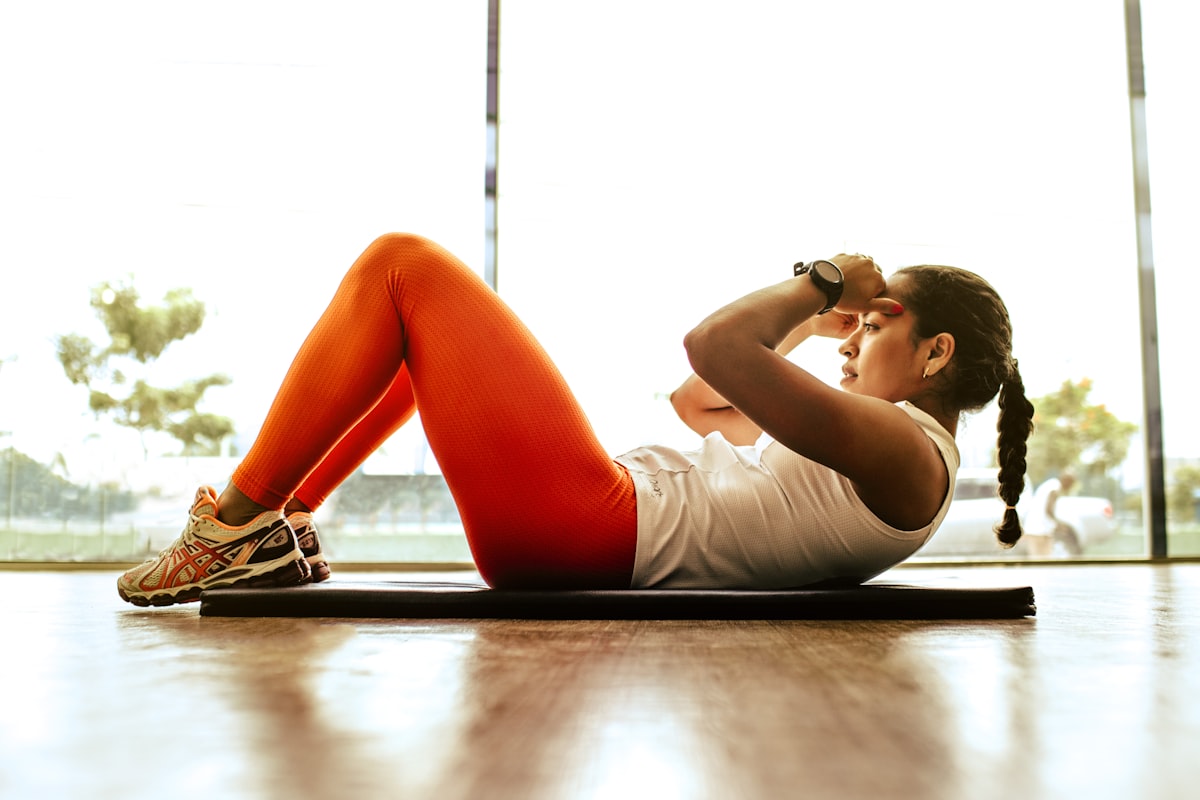
Healthy active person representing body composition and sleep recovery · Photo: Unsplash
Body Fat, Sleep Apnea, and Sleep Quality
Body fat percentage — particularly its distribution — has a more direct relationship with sleep quality than BMI in many cases. Fat deposited in the neck and upper airway is the primary mechanical driver of obstructive sleep apnea, independent of total body weight. Understanding your body composition provides more actionable health information than BMI alone.
Neck Fat and Sleep Apnea
Neck circumference is one of the strongest predictors of obstructive sleep apnea (OSA) — stronger than BMI in some studies. For men, neck circumference above 43cm significantly increases OSA risk; for women, above 38cm. Excess neck fat increases the mechanical load on upper airway muscles during sleep, narrows the airway lumen, and makes airway collapse more likely during the muscle relaxation of sleep. This is why people with normal BMI but high body fat percentage (particularly neck fat) can have significant sleep apnea while muscular people with high BMI may not.
Visceral Fat and Sleep Architecture
Visceral abdominal fat — the metabolically active fat stored around internal organs — is a significant source of inflammatory cytokines (TNF-alpha, IL-6) that disrupts sleep architecture. These inflammatory markers are associated with reduced slow-wave deep sleep, increased nighttime awakenings, and elevated insomnia rates independent of sleep apnea. Reducing visceral fat through caloric deficit and exercise improves sleep quality through both mechanical (reduced neck fat) and systemic (reduced inflammation) pathways.
Body Fat — FAQ
What is a healthy body fat percentage?
ACE (American Council on Exercise) categories for men: Essential fat 2–5%, Athletes 6–13%, Fitness 14–17%, Acceptable 18–24%, Obese 25%+. For women: Essential 10–13%, Athletes 14–20%, Fitness 21–24%, Acceptable 25–31%, Obese 32%+. Optimal health outcomes appear at approximately 10–20% for men and 18–28% for women. Both very low body fat (below essential fat) and very high body fat carry health risks.
How accurate is the Navy body fat formula?
The US Navy method has ±3–4% accuracy compared to DEXA (the clinical gold standard) in validation studies — making it one of the most accurate accessible methods. For comparison: BMI-to-body-fat conversions are ±5–8% accurate; bioelectrical impedance (bathroom scales) is ±3–5% but significantly affected by hydration; skinfold calipers are ±3–5% with proper technique; DEXA is ±1–2% but requires clinical equipment. The Navy method's measurement from neck, waist, and hips captures body shape information that pure weight-and-height (BMI) misses.
Can body fat percentage affect sleep quality?
Yes — particularly excess neck and abdominal fat. Neck fat is the primary mechanical driver of sleep apnea; a neck circumference above 43cm (men) or 38cm (women) is a key risk factor regardless of total BMI. Visceral abdominal fat produces inflammatory cytokines that disrupt sleep architecture — reducing deep sleep and increasing nighttime awakenings. Even "normal weight obesity" (healthy BMI but high body fat) is associated with significantly worse sleep quality than lean individuals at the same BMI, which is why body fat measurement provides more clinically relevant information than BMI for sleep health assessment.
How do I reduce body fat percentage?
Body fat reduction requires a sustained caloric deficit — consistently eating fewer calories than you burn, while maintaining adequate protein (1.6–2.4g/kg) to preserve lean mass. Resistance training preserves (and can increase) muscle mass while the deficit reduces fat. Adequate sleep (7–9 hours) significantly improves fat loss outcomes — sleep-deprived people in caloric deficit lose more lean mass and less fat than those sleeping adequately on identical diets. The combination of modest caloric deficit + adequate protein + resistance training + adequate sleep is the most evidence-based approach for body composition improvement.
📋 Reviewed by: MySleepTool Editorial Team · Last updated: July 2026 · Sources: Hodgdon JA & Beckett MB US Navy body fat formula (1984), Deurenberg P et al. body fat prediction equations, ACE body fat percentage categories. Not medical advice.